This morning we’ll join a local guide for a fascinating walk through Munich’s Old Town, weaving together the history and traditions of Munich and Bavaria. We’ll visit the legendary Hofbräuhaus beerhall and explore the centuries-old Viktualienmarkt, famous for traditional crafts and gourmet food stalls — your guide can point out some local specialties along the way. The rest of the day is yours to explore the English Garden, take in a museum, or — on winter tours — simply savor the surrounding gemütlichkeit (comfy-coziness) of Munich’s Christmas markets. Tonight, you’ll be free to perfect your prost with new friends at one of Munich’s historic beerhalls, where you can hoist a liter-sized mug of beer and a pretzel as big as your head. Moderate walking: 2–6 miles throughout the day with some hills and stairs. No bus. Sleep in Munich.
The alarm went off at 6 AM. We were sleeping soundly. Breakfast at seven. Getting an early start is delightfully crowd free.
At 9 AM we had Gert, a local guide for the morning walk into the old part of Munich. There was an abundance of cultural information about the formation of the early Munich. Also, there was extensive rebuilding after World War II. It was very much a restoration process instead of a move to modern cities and skyscrapers. After WWII, as much as 70 to 80% was destroyed due to Allied bombing. Munich was home to BMW where much of the aircraft parts were made.
Gert, our guide, spent a lot of time on the rise of the Third Reich and the subsequent hell that was created by their efforts, especially that took place a place in the Jewish holocaust of Dachau, a place that started out as a labor camp for political prisoners but it was gradually changed into the death camp.
Gert was engaging and fun; she described lots of other kings and informational stories about the places on our walk.
We went to two churches: Saint Peters and Saint Mary’s. Our route was going through a mall area that was very much upper-class shops. The route ended the one and a half hour walk at the Hofbrau HB beer house. Gert provided lots of information about monks and beer. Beer was a stable food source for the monks, because they learned how to make it and keep it from spoilage.
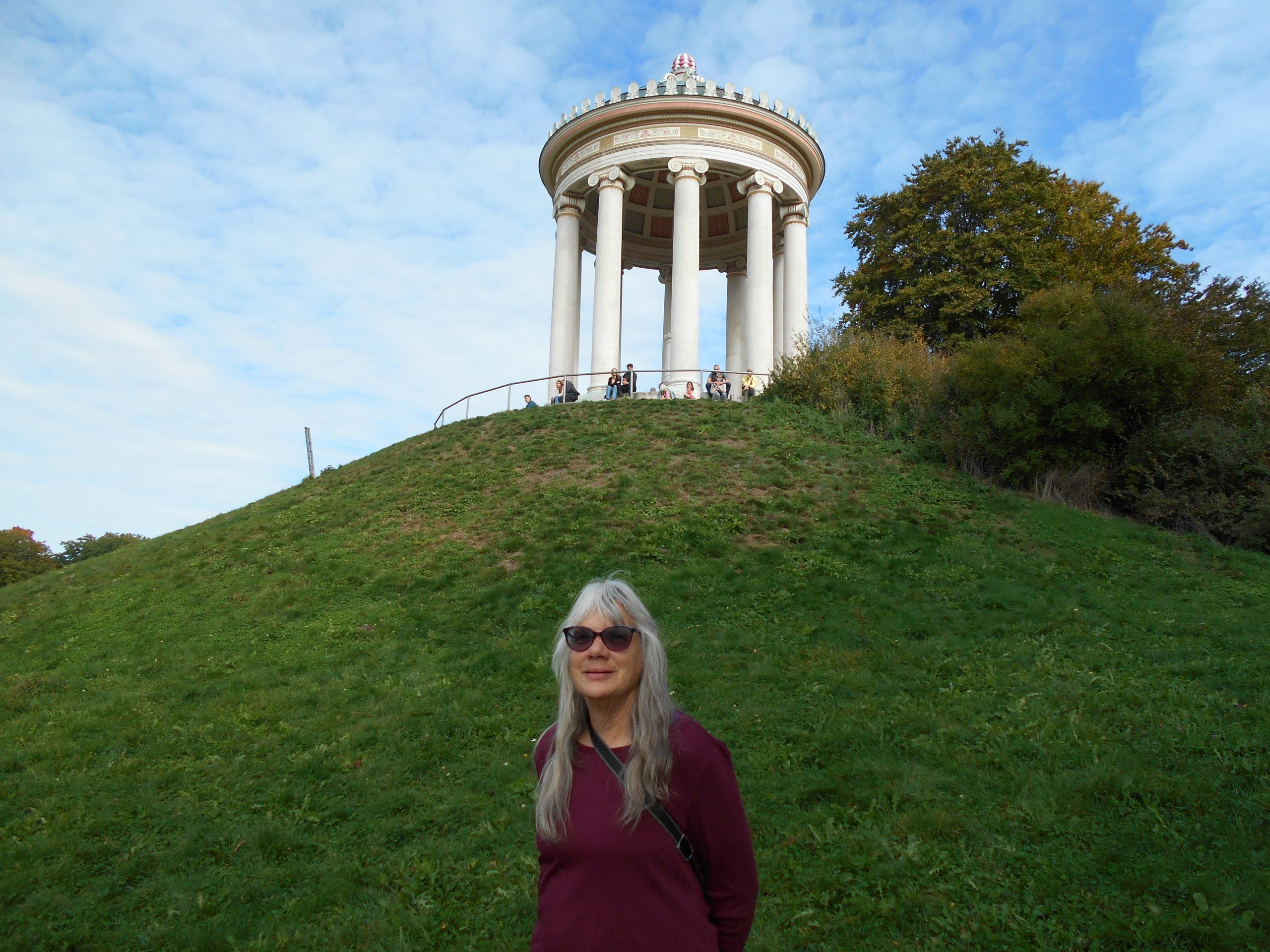
Beautiful gazebo at the English gardens with a fantastic overlook.
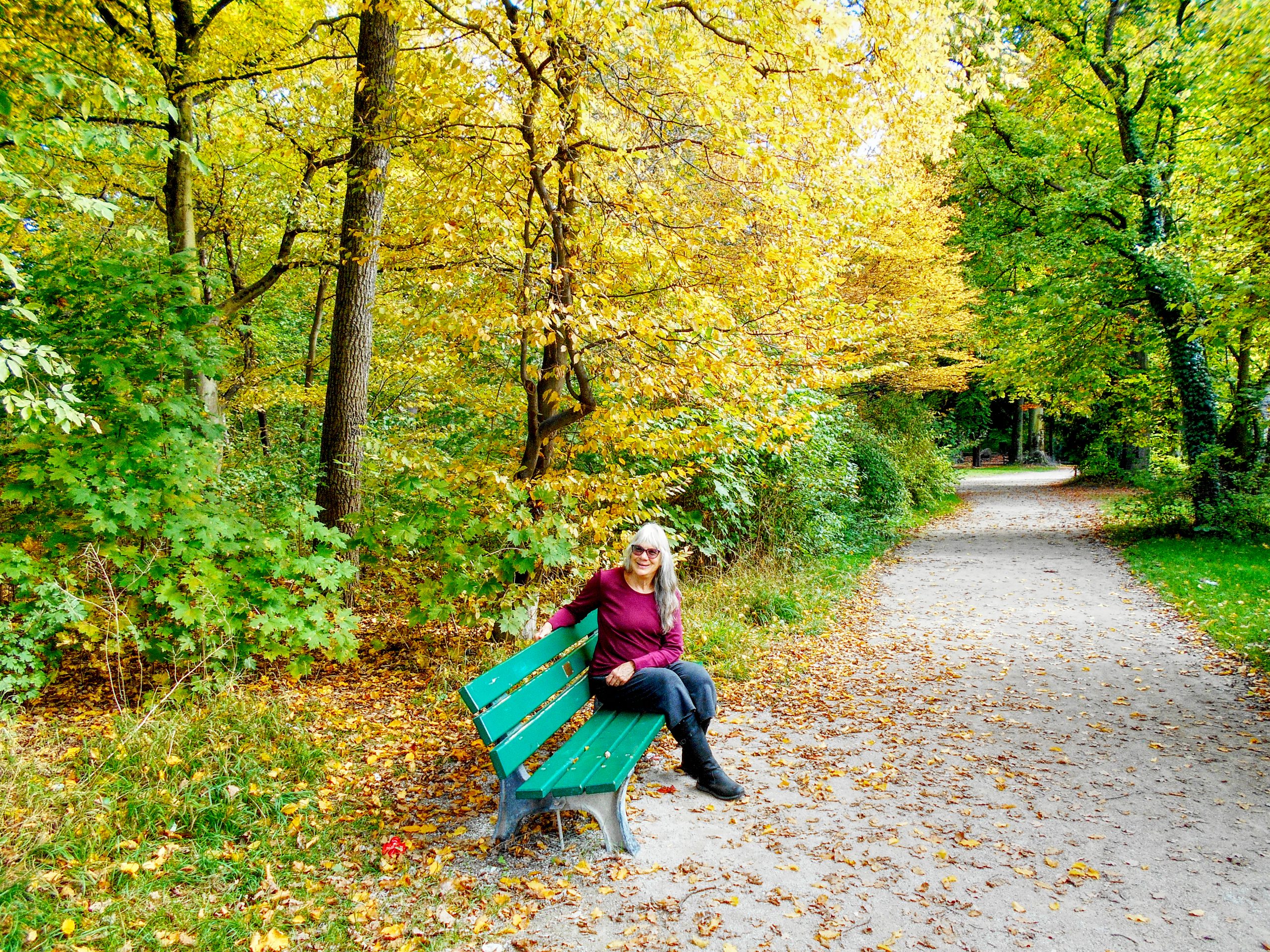
Bright autumn color in the English Gardens, Munich
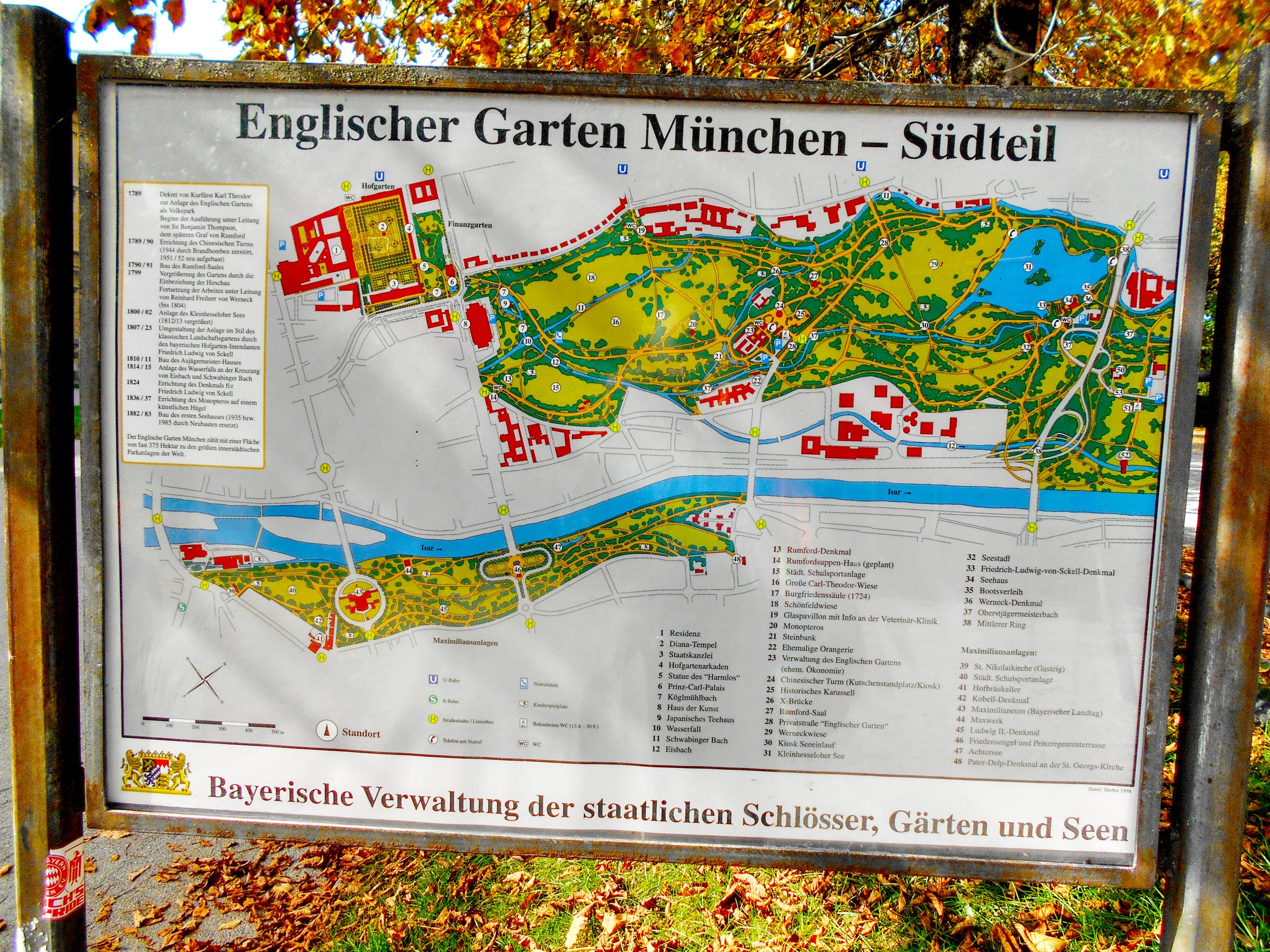
A helpful map at the entrance to the English Garden.
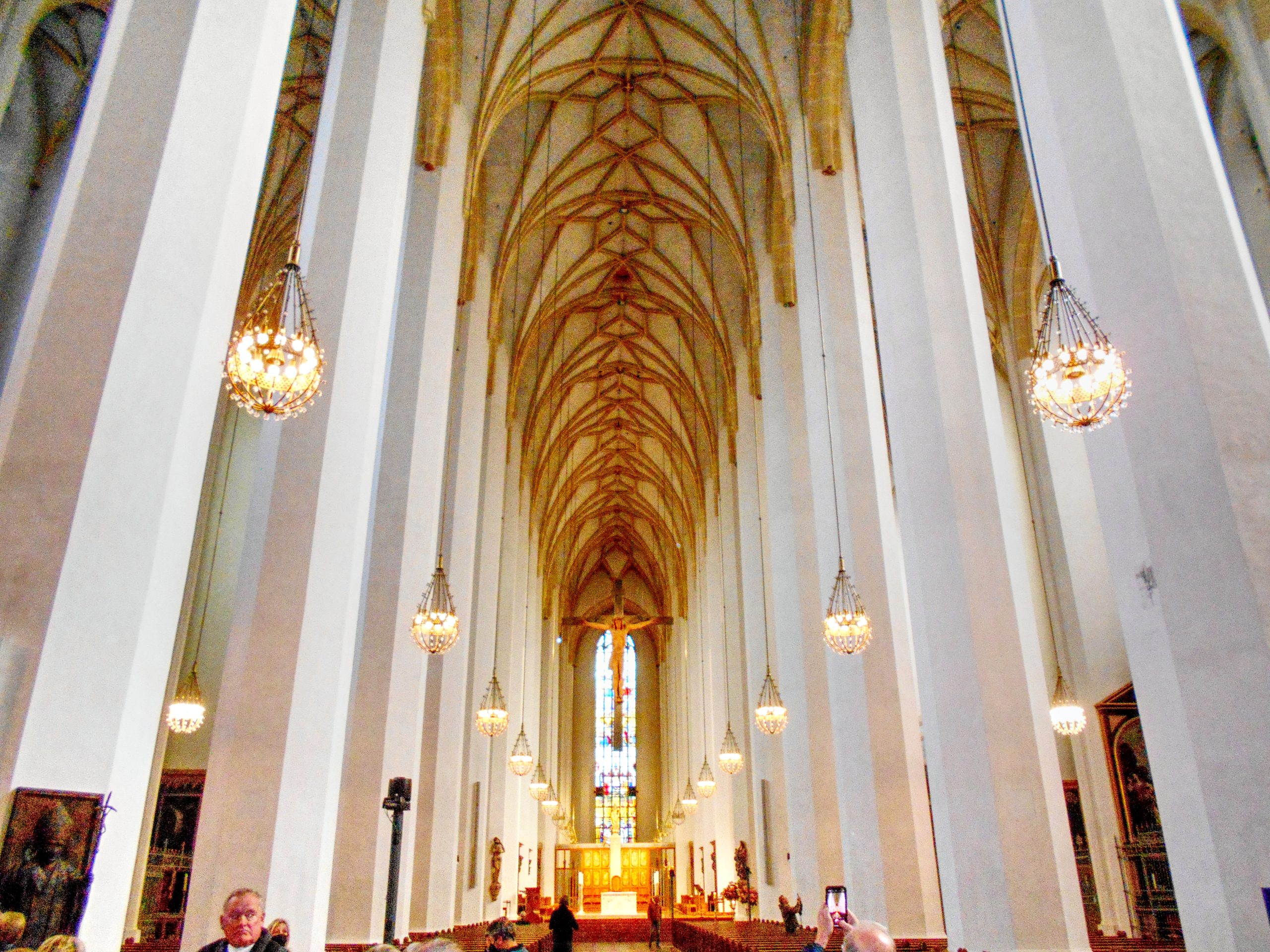
St. Peters in Munich. It is rare to see such a bright inside.
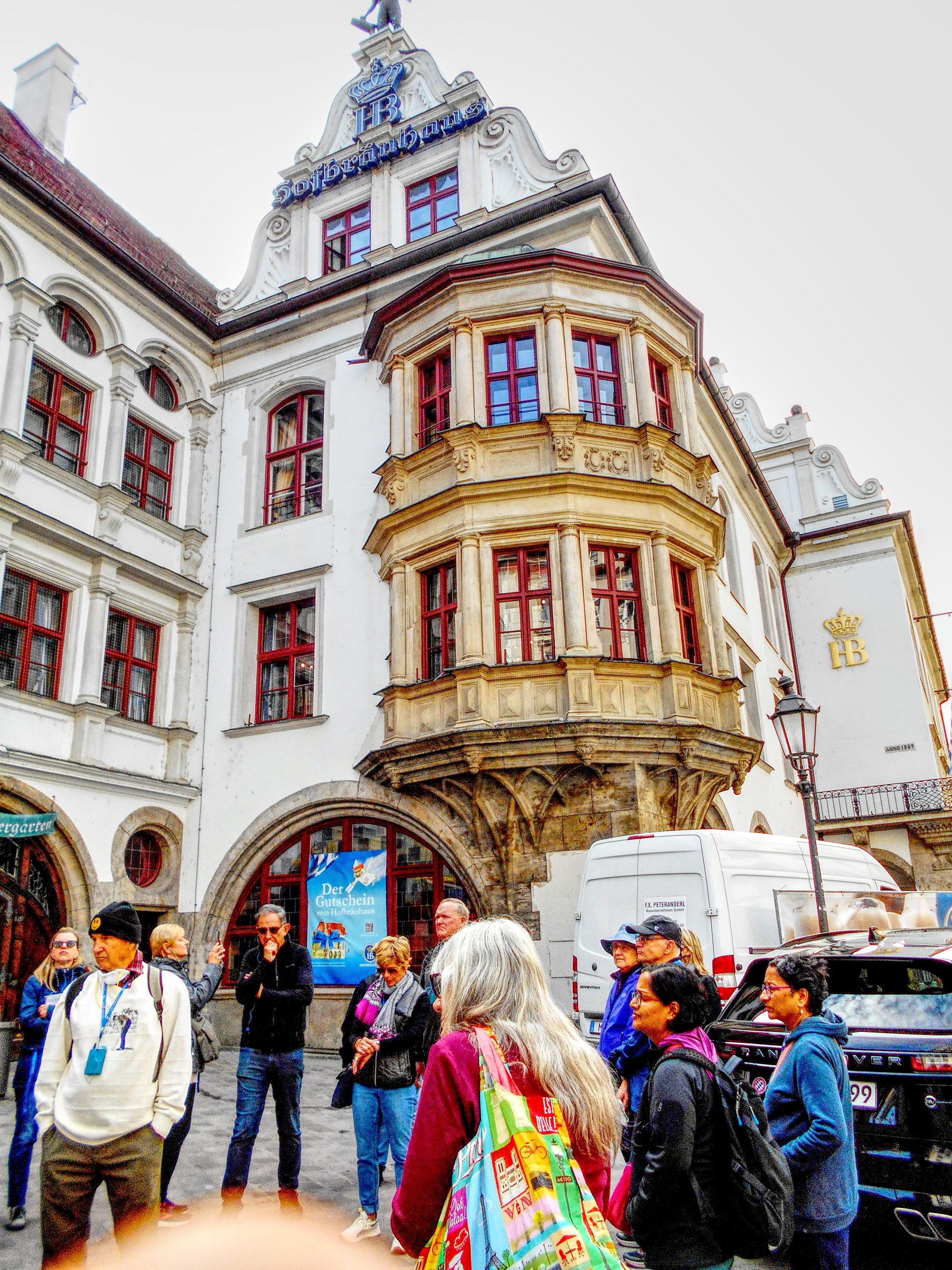
The famous tavern in Munich – https://mobil.hofbraeuhaus.de/en/welcome.html
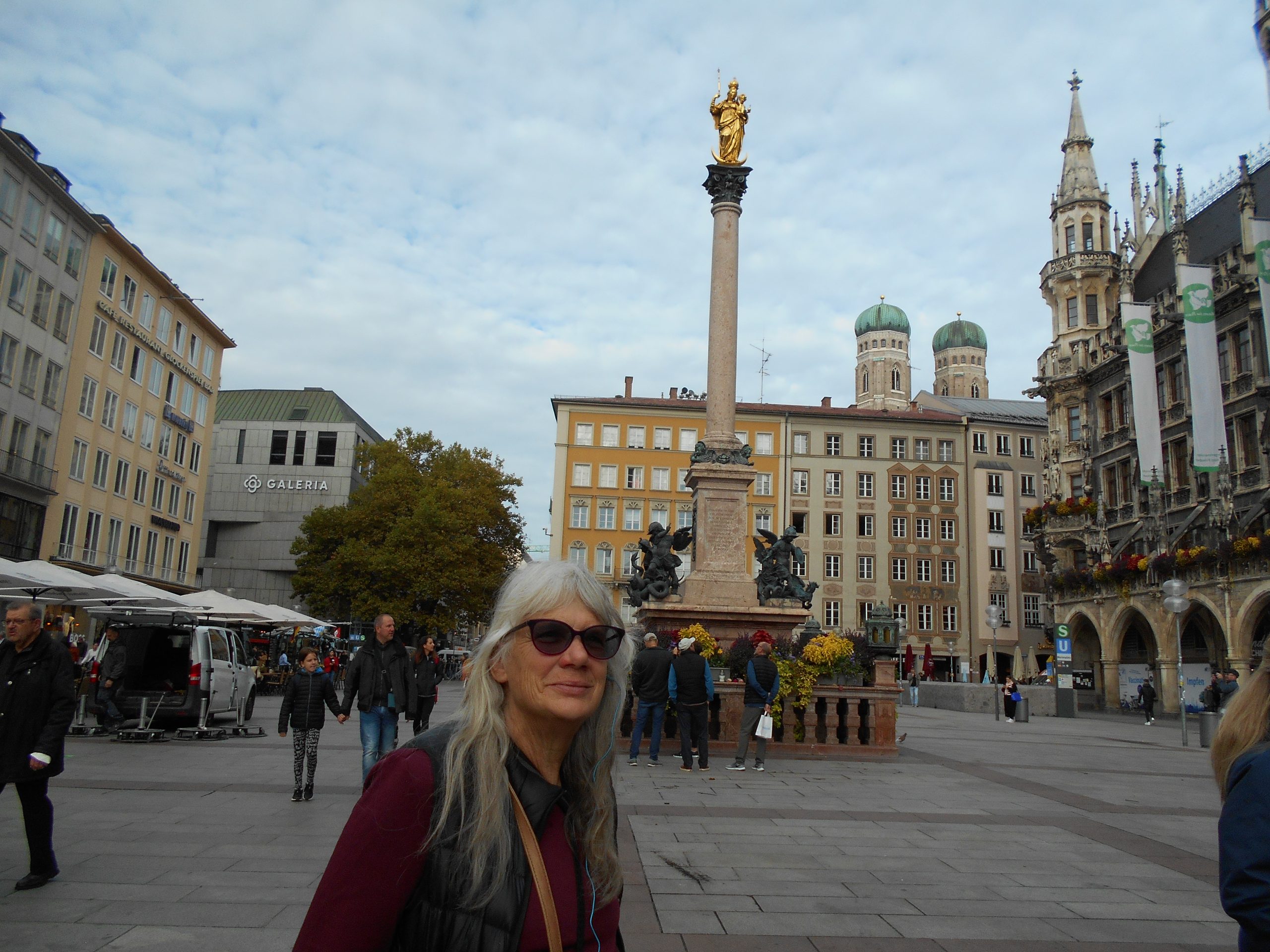
St. Mary’s Square, Munich
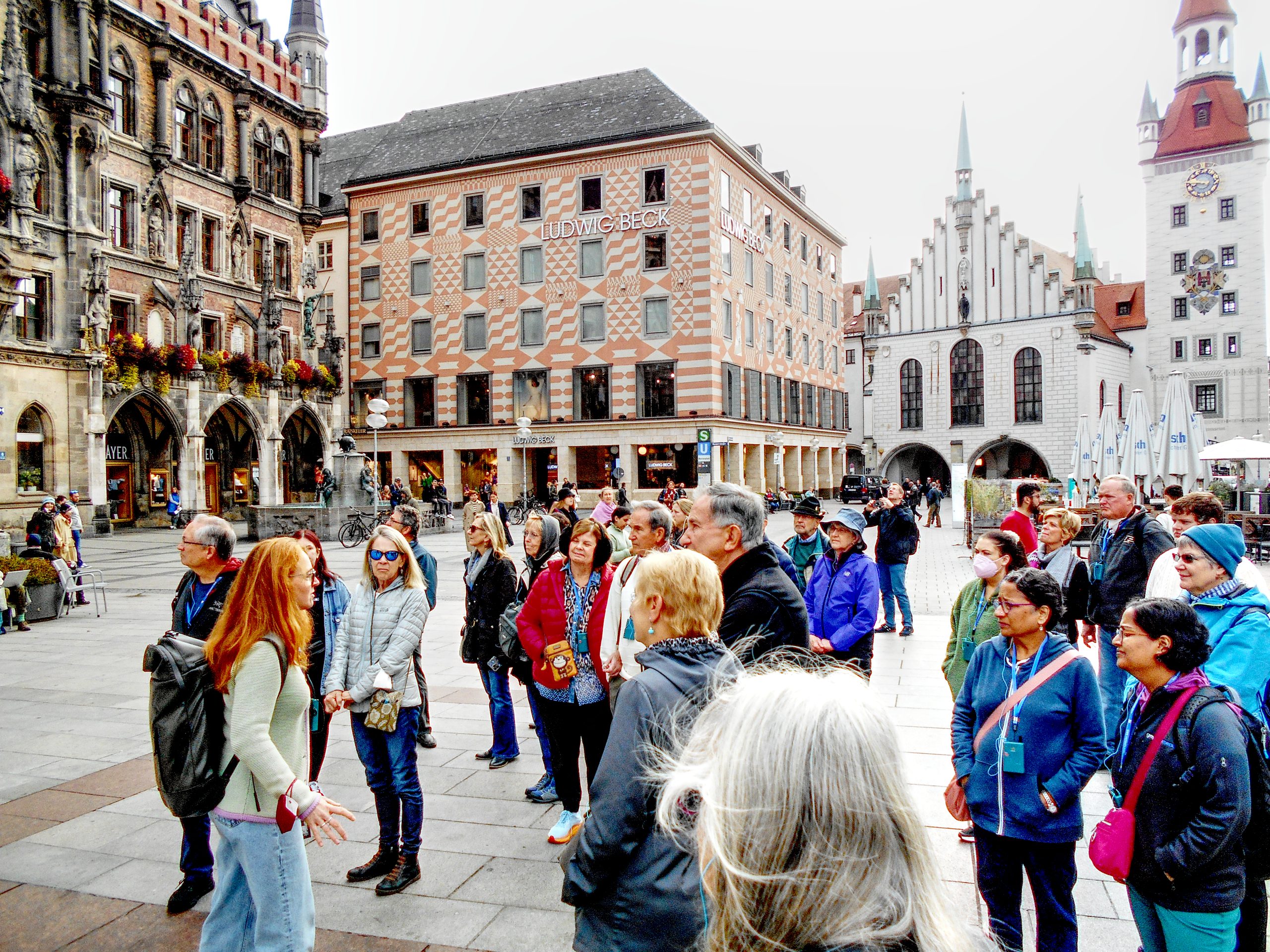
Our local guide, Girt, was explaining the Glockenspiel to our group.
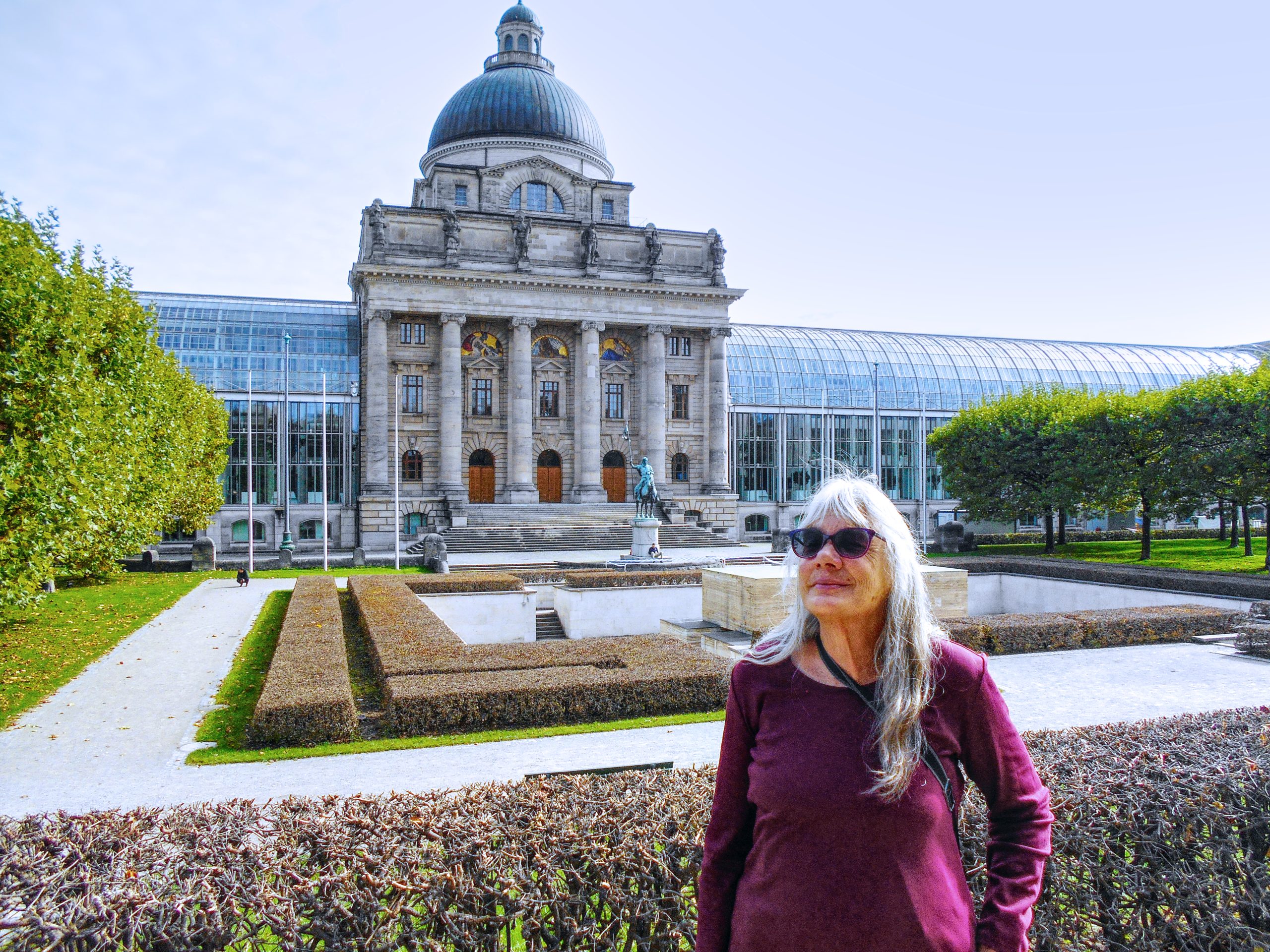
Bayerische Staatskanzlei (Bavarian State Chancellery) is the name of a state agency of the German Free State of Bavaria (from Wikipedia).
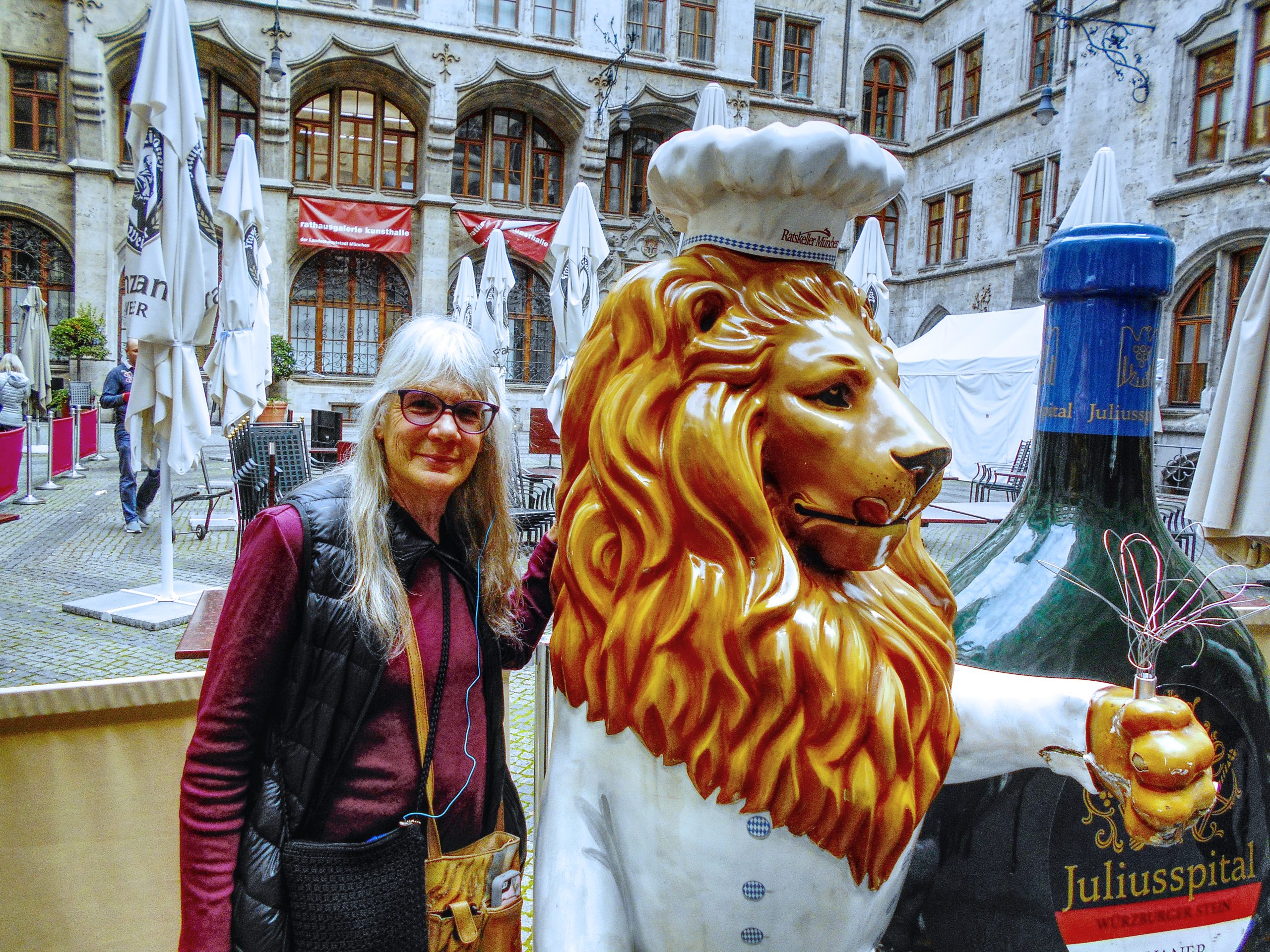
One of the mascots for the Ratskeller restaurant.
In the afternoon, we were free to explore. We went to find the English gardens. It was a tiring walk but the trees were beautiful and there were ducks and swans in the canals. We climbed the hill in the middle of the park, where there was a large gazebo. It was a great place to rest and overlook the people and dogs come and go. Also, we noted there were no stray dogs. We stopped at an outdoor café for a late lunch. The food and rest made an elegant lunch, a lovely salad and pasta very refreshing and gave us energy to return to the hotel. On the way back we stopped at the market to see all of the vendors. There were lots of people with exotic booths. We got some strawberries and seedless grapes that were unusually good taste, very sweet; plus, blueberries for tomorrow’s breakfast.
Listen to the bells of Marienplatz Munich Carillon – more information here: http://www.munich-touristinfo.de/Carillon.htm
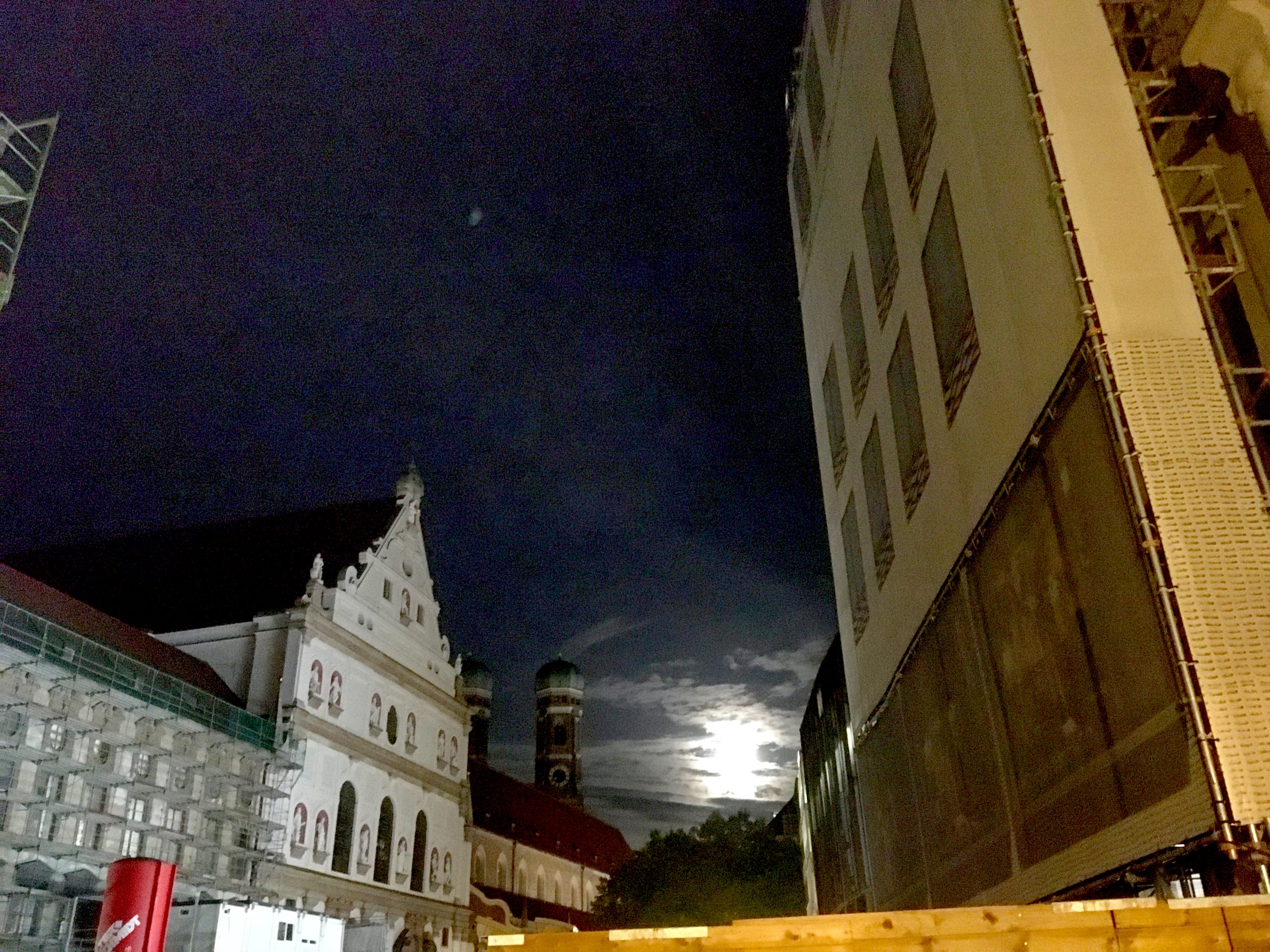
On the walk back to hotel, the harvest moon over St. Mary’s