The 3rd Man Museum website: https://www.3mpc.net/englsamml.htm
Google Maps: https://goo.gl/maps/CNQAkyvbU3r9WrQp6
Outstanding work by Gerhard Strassgschwandtner (our day guide in Vienna) and Karin Höfler
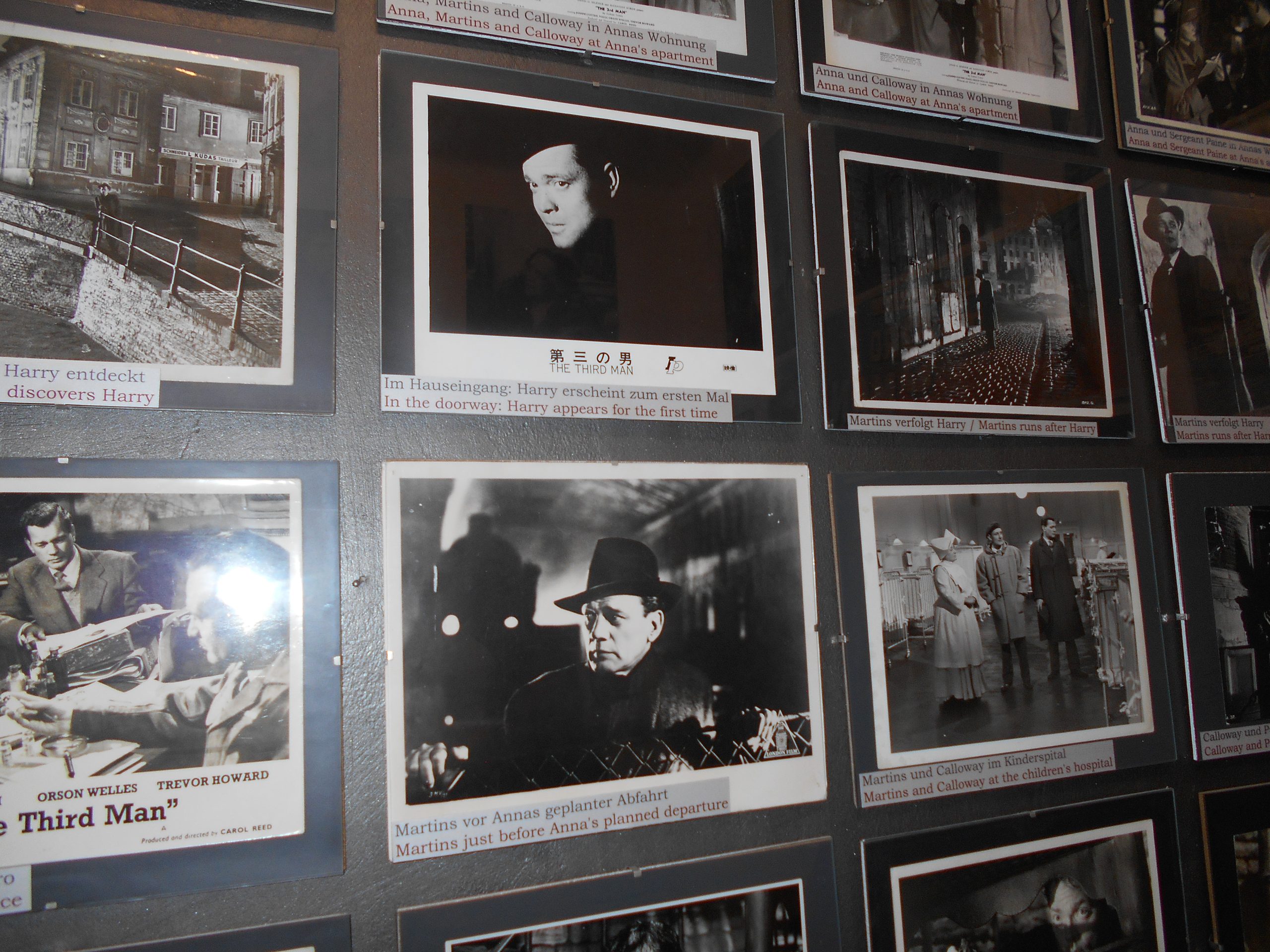
Inside the 3rd Man Museum
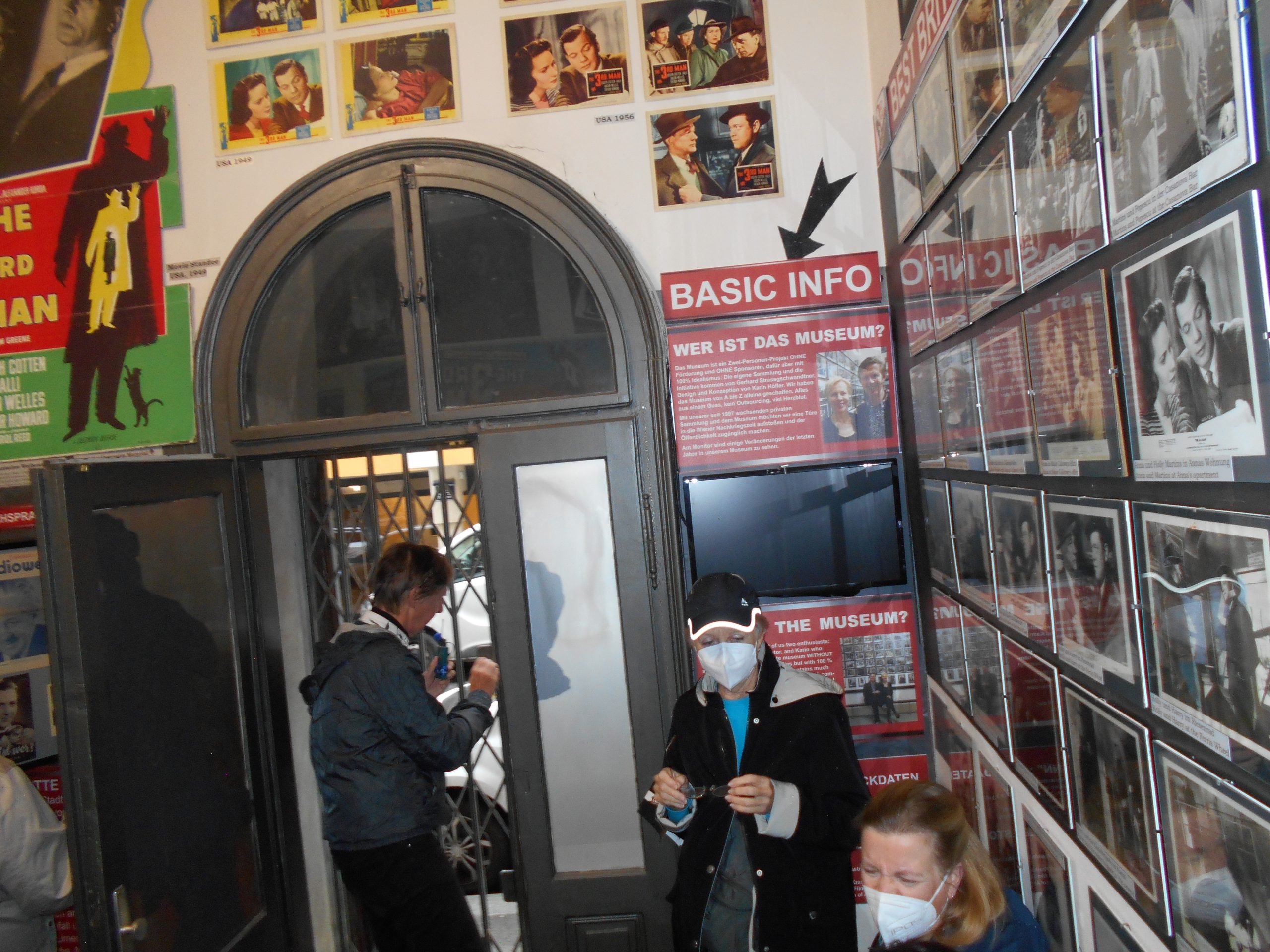
Inside the 3rd Man Museum
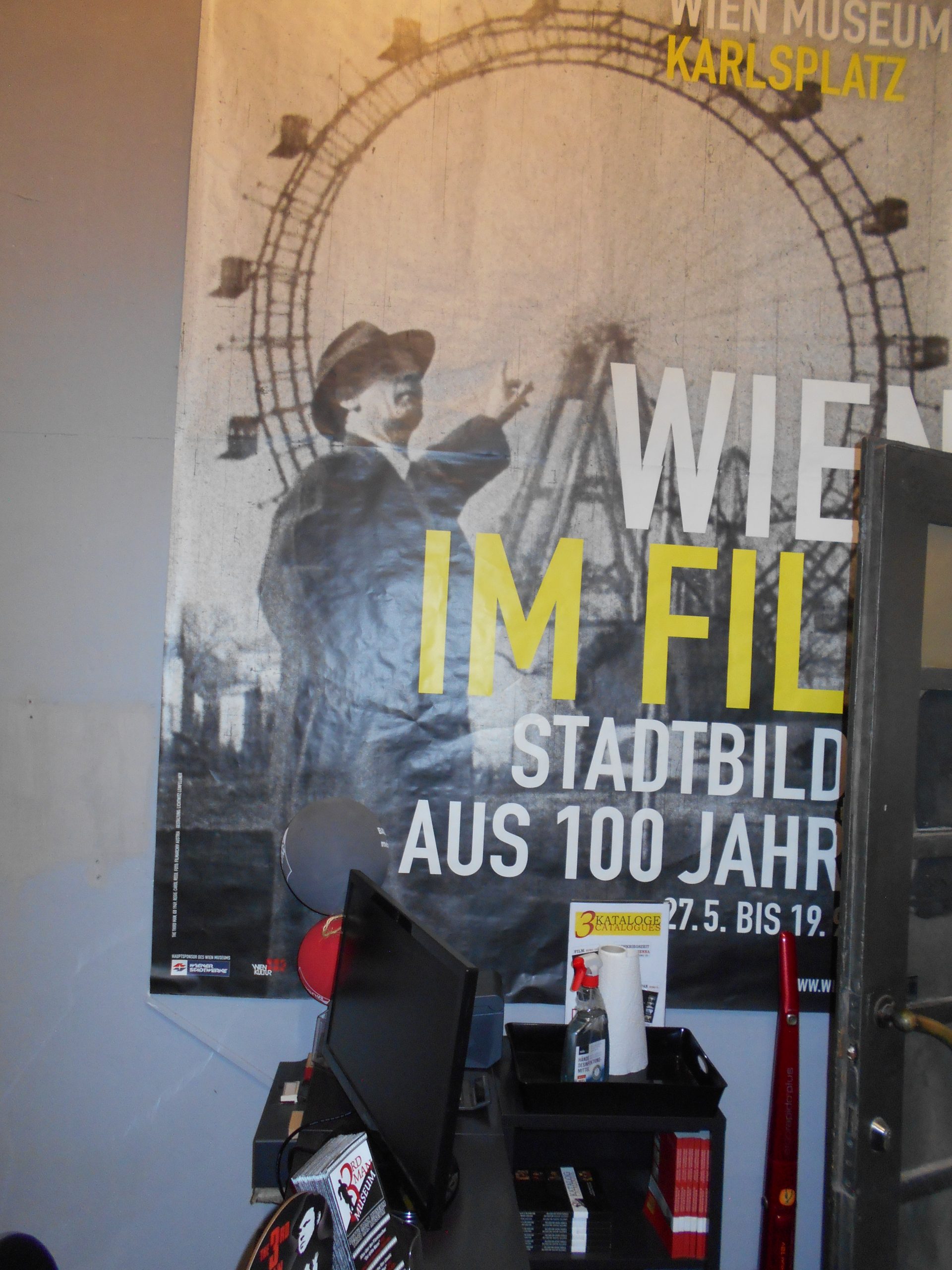
Inside the 3rd Man Museum
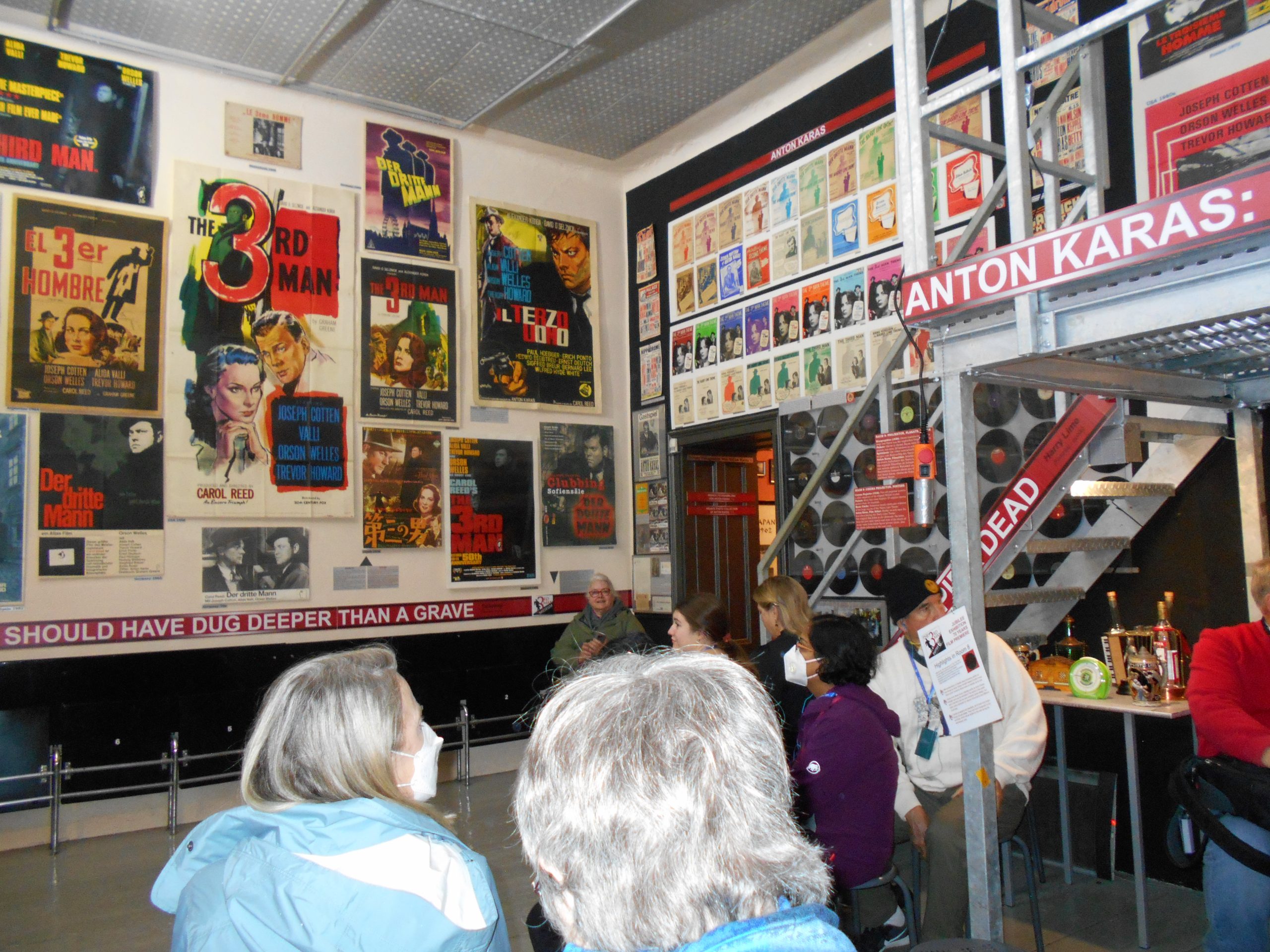
Inside the 3rd Man Museum
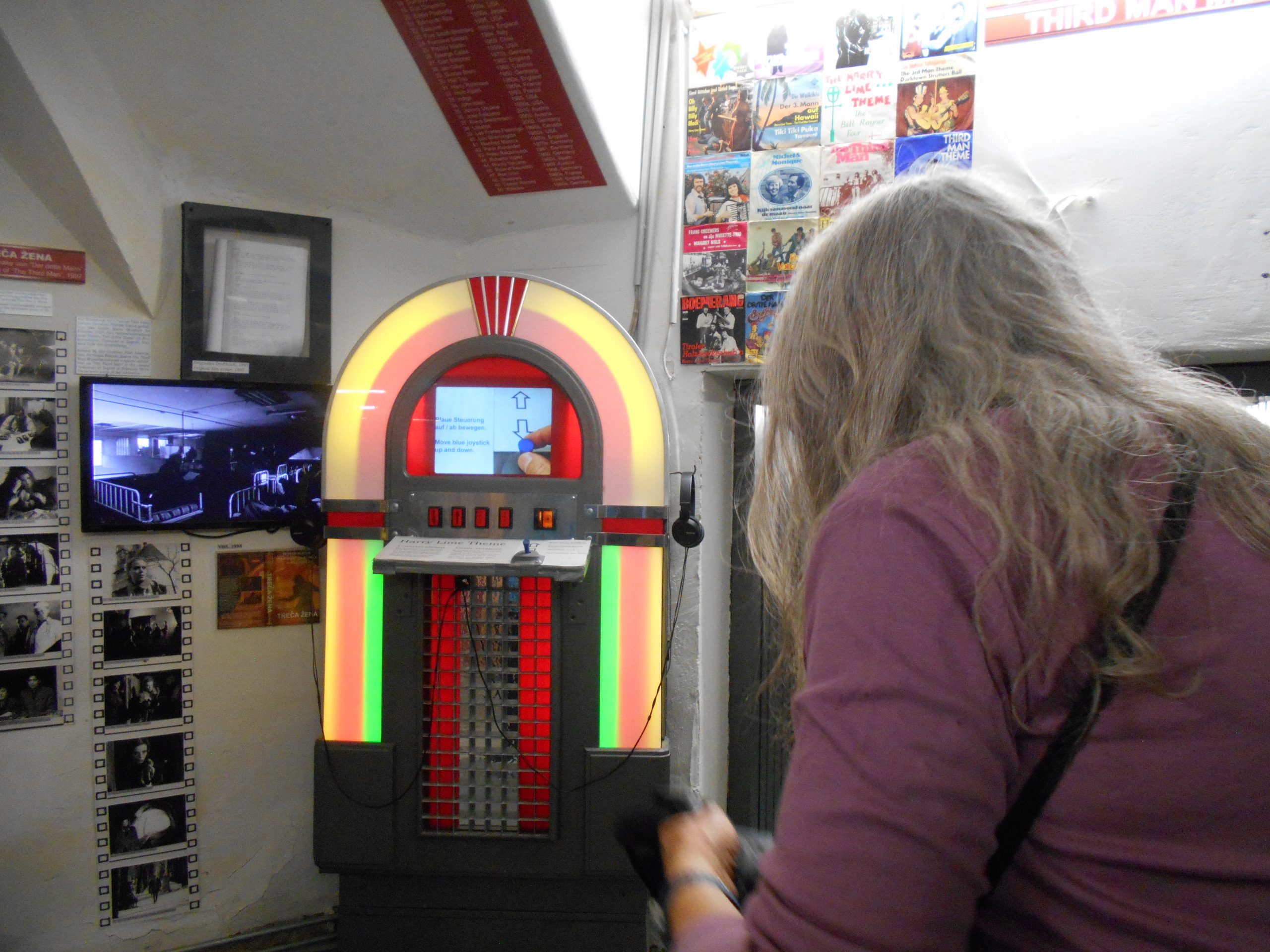
Inside the 3rd Man Museum
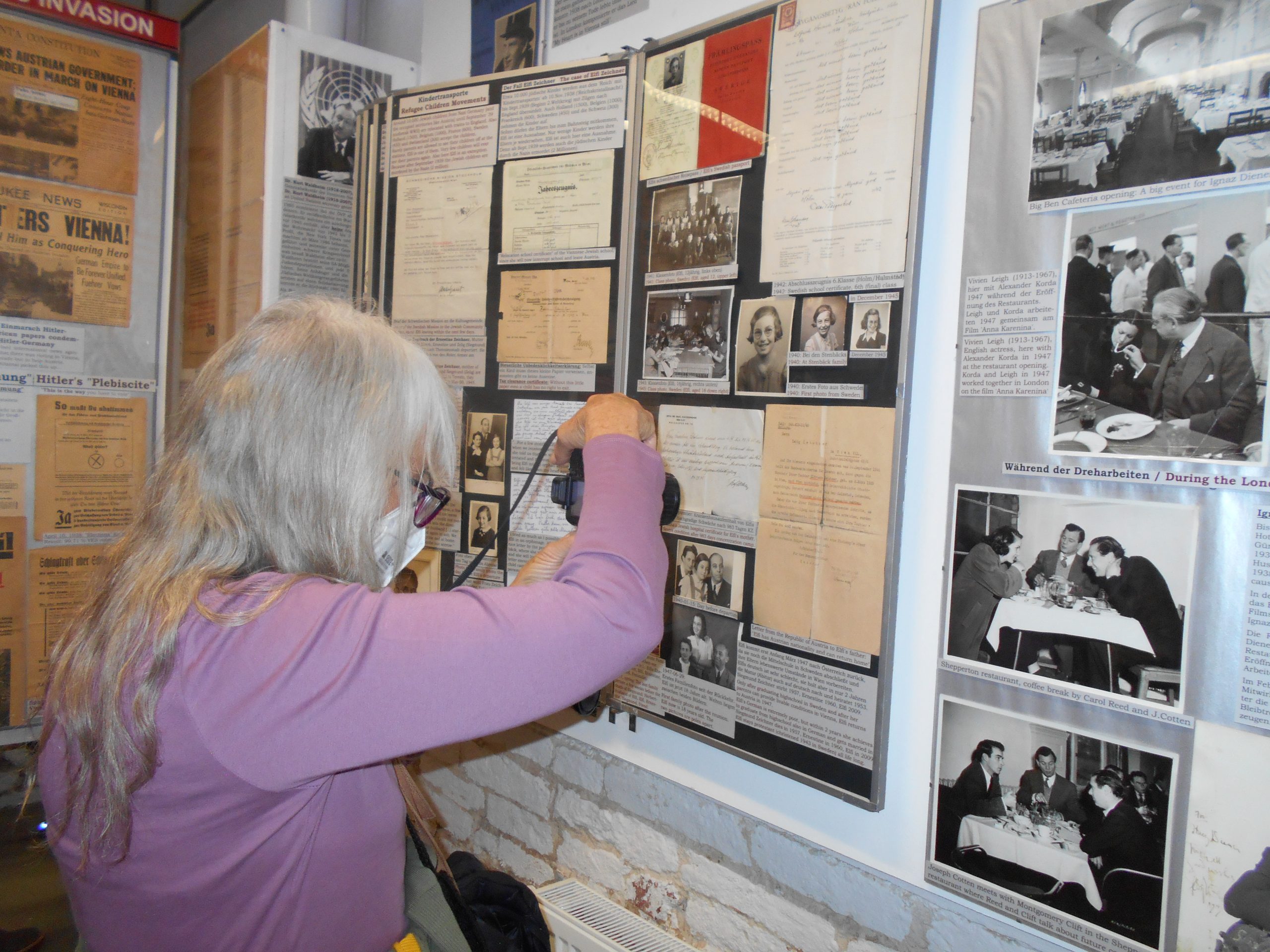
Inside the 3rd Man Museum
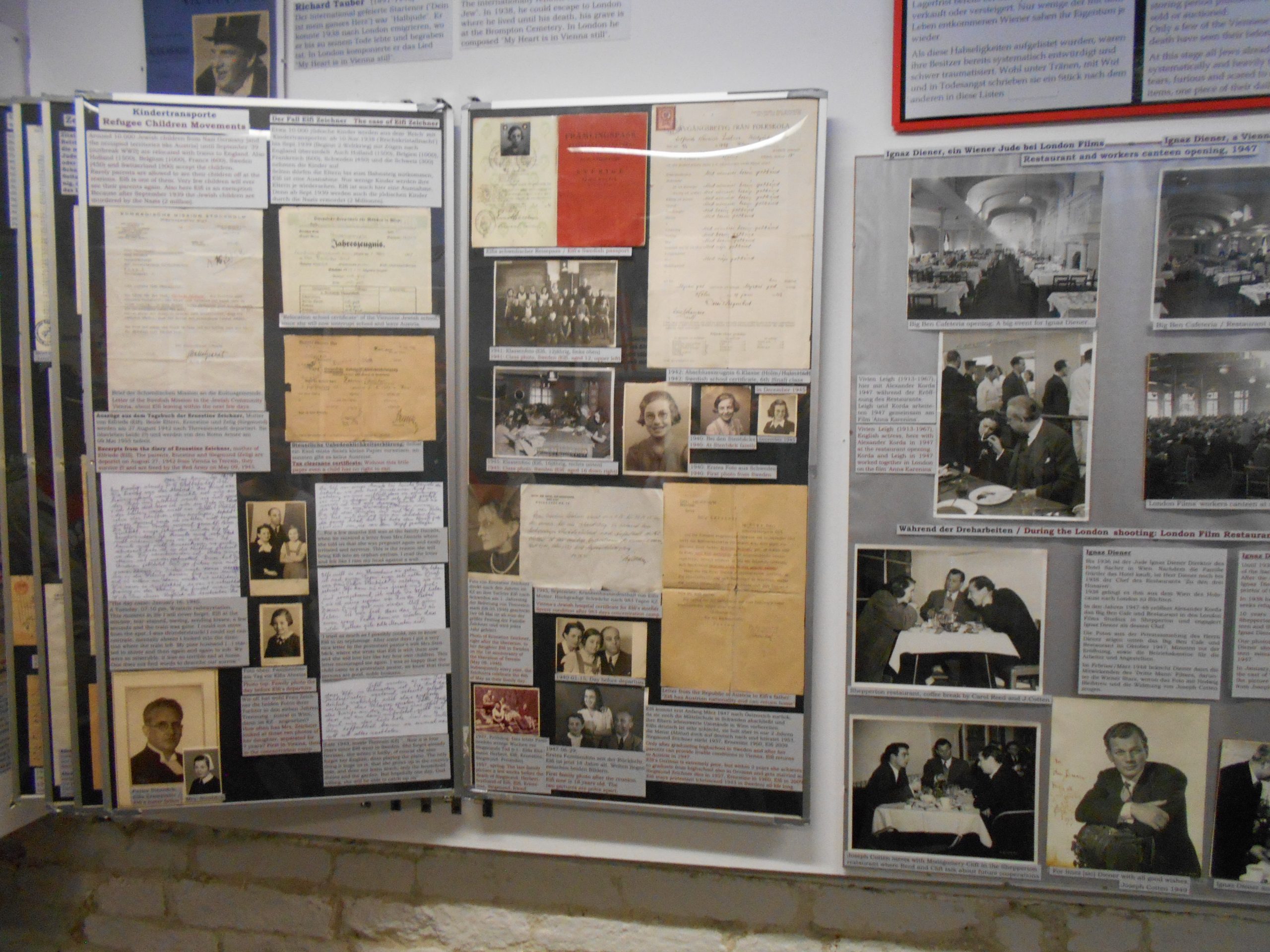
Inside the 3rd Man Museum
Inside the 3rd Man Museum
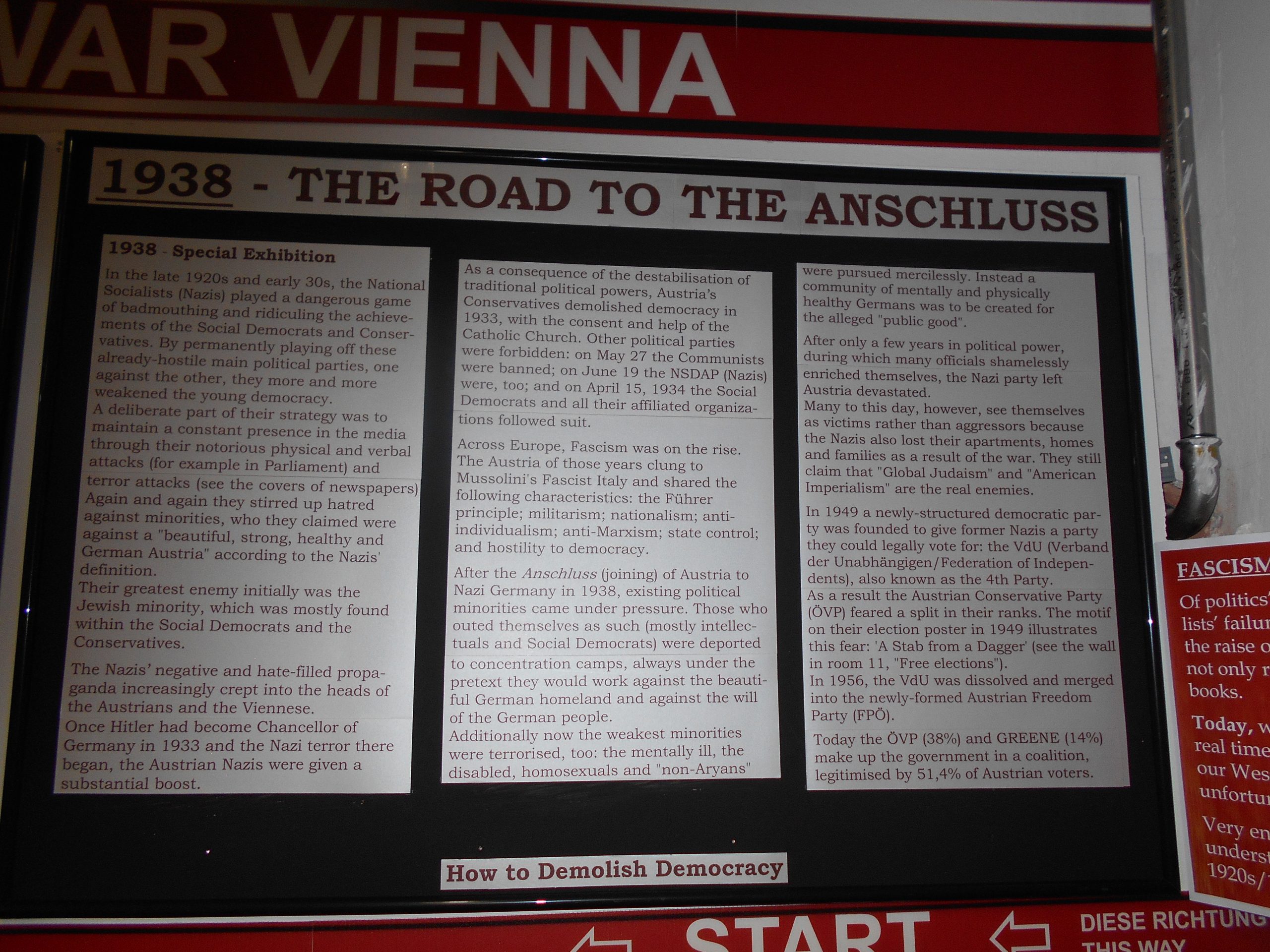
How to demolish Democracy
Inside the 3rd Man Museum
1938 – The Road to the Anschluss
In the late 1920s and early 30s, the National Socialists (Nazis) played a dangerous game of badmouthing and ridiculing the achievements of the Social Democrats and Conservatives. By permanently playing off these already hostile main political parties, one against the other, they more and more weakened the young democracy.
A deliberate part of their strategy was to maintain a constant presence in the media through their notorious physical and verbal attacks (for example in Parliament) and terror attacks (see the covers of newspapers) Again and again they stirred up hatred against minorities, who they claimed were against a “beautiful, strong, healthy and German Austria” according to the Nazis’ definition.
Their greatest enemy initially was the Jewish minority, which was mostly found within the Social Democrats and the Conservatives.
The Nazis’ negative and hate-filled propaganda increasingly crept into the heads of the Austrians and the Viennese.
Once Hitler had become Chancellor of Germany in 1933 and the Nazi terror there began, the Austrian Nazis were given a substantial boost.
As a consequence of the destabilization of traditional political powers, Austria’s Conservatives demolished democracy in 1933, with the consent and help of the Catholic Church. Other political parties were forbidden: on May 27 the Communists were banned; on June 19 the NSDAP (Nazis) were, too; and on April 15, 1934 the Social Democrats and all their affiliated organizations followed suit.
Across Europe, Fascism was on the rise. The Austria of those years clung to Mussolini’s Fascist Italy and shared the following characteristics: the Führer principle; militarism; nationalism; anti-individualism; anti-Marxism; state control; and hostility to democracy.
After the Anschluss (joining) of Austria to Nazi Germany in 1938, existing political minorities came under pressure. Those who outed themselves as such (mostly intellectuals and Social Democrats) were deported to concentration camps, always under the pretext they would work against the beautiful German homeland and against the will of the German people.
Additionally now the weakest minorities were terrorized, too: the mentally ill, the disabled, homosexuals and “non-Aryans” were pursued mercilessly. Instead a community of mentally and physically healthy Germans was to be created for the alleged “public good”.
After only a few years in political power, during which many officials shamelessly enriched themselves, the Nazi party left Austria devastated.
Many to this day, however, see themselves as victims rather than aggressors because the Nazis also lost their apartments, homes and families as a result of the war. They still claim that “Global Judaism” and “American Imperialism” re the real enemies.
In 1949 a newly-structured democratic party was founded to give former Nazis a party they could legally vote for: the VdU (Verband der Unabhängigen / Federation of Independents), also known as the 4th Party.
As a result the Austrian Conservative Party (ŐVP) feared a split in their ranks. The motif on their election poster in 1949 illustrates this fear: ‘A Stab from a Dagger’ (see the wall in room 11, “Free elections”).
In 1956, the VdU was dissolved and merged into the newly-formed Austrian Freedom Party (FPŐ).
Today the ŐVP (38%) and the GREENE (14%) make up the government in a coalition, legitimized by 51.4% of Austrian voters.